
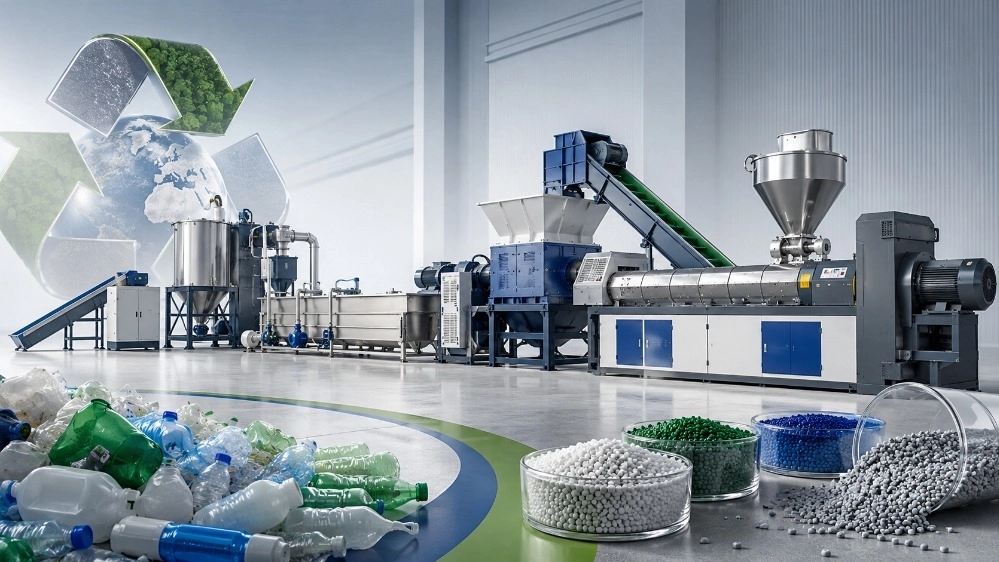
Today, with the increasing consumption of plastic materials in various industries and the importance of protecting the environment, the plastic recycling industry has become one of the most profitable and dynamic areas of investment.
A comprehensive guide to buying a plastic recycling machine and complete granule production line
Conversion of plastic waste into valuable raw materials such as granules, in addition to reducing environmental pollution, brings great added value to producers. To enter this productive industry, the first step is to know the technical dimensions, processes and equipment required.
A standard plastic recycling machine and a high-quality complete granule production line are the backbone of this business. Choosing the right machinery not only guarantees the quality of the final product, but also significantly reduces depreciation and energy consumption costs. In this article, we take a comprehensive look at this equipment, the stages of the recycling process and how to set up a successful production line.
Economic importance of plastic recycling and granule production
Plastics constitute a major part of urban and industrial waste. These materials pose many challenges due to their non-degradability in nature, but on the other hand, they are a cheap and readily available source for the production of secondary materials. Recycled granule, which is the final product of the recycling process, is produced in the form of small plastic grains and is widely used as a raw material in the plastic injection industry, the production of pipes, nylons, car parts, and packaging.
The high demand for high-quality granules in the domestic and export markets has made the establishment of a complete granule production line a unique economic opportunity. Investors who process waste using a modern plastic recycling machine can take a large share of the raw material production market for the plastic industry.
The main components of the complete granule production line
To convert plastic waste into uniform and high-quality granules, there is a need for a coordinated chain of machinery. Each part of this production line has a specific task, and a defect in any of them can severely reduce the quality of output granules. The main components of a standard line are:
Plastic waste grinder and shredder
The first step in the recycling cycle is waste preparation. Incoming plastics, which include bottles, gallons, baskets or old nylons, are large in size. The grinding machine is responsible for turning these wastes into small and uniform pieces (flakes) so that the next stages of washing and melting can be done in a more optimal way.
Washing and separation tubs (flotation)
Plastic waste is usually contaminated with dirt, grease, labels and other waste materials. At this stage, the plastic fins enter the washing tubs. The separation process is based on material density; In this way, lighter plastics float on water and heavier impurities settle.
Centrifuge and dryer
After washing, the moisture in the plastics should be completely removed. The presence of water in the raw materials when entering the granulation machine causes bubbles and a severe drop in the quality of the final granule. The high-speed dewatering centrifuge reduces the moisture of feathers to the standard level.
Extruder
The beating heart of every complete granule production line is the extruder. In this device, dried flakes are melted under specific heat and pressure. After passing through special filters to separate small impurity particles, the melted plastic is removed from the machine in the form of hot plastic strands, and after passing through the cold water pool, they are cut into small and uniform pieces (granules) by a cutter.
Types of plastic recycling machines based on the type of feed
There are different types of plastics whose formulation and thermal behavior are different from each other. For this reason, the plastic recycling machine should be designed and built according to the type of input material. The two main categories of recycled plastics include the following:
Hard plastics recycling line (injection and blowing)
These lines are designed to recycle plastics such as heavy polyethylene (HDPE) and polypropylene (PP), which are used in making gallons, baskets, containers and car parts. The machinery of this sector must have the ability to crush and process hard and thick parts.
Recycling line for soft and film plastics (nylon and cellophane)
Nylons and plastic films (LDPE) require a different feeding system in the extruder due to their low density and soft state. Condenser or thickener systems are usually used in these lines so that the soft plastics are compressed and ready to melt before entering the extruder spiral.
Key factors in choosing a high-quality plastic recycling machine
Purchase of industrial equipment requires careful examination of technical parameters. The wrong choice at this stage can lead to the waste of capital and the production of low-quality products. When choosing equipment, you should pay special attention to the following points:
- Extruder cylinder and spiral design: The type of alloy used in making the cylinder and spiral and its geometric design has a direct role in the complete curing of the material and the life of the device. Resistance to wear and corrosion is one of the vital features of this part.
- Gassing system (degassing): The presence of small moisture or trapped gases in the melted plastic causes porosity in the granule. Advanced degassing systems remove disturbing gases from the cylinder to produce thick and transparent granules.
- Type and efficiency of engine and gearbox: Power transmission in the recycling machine must be done without vibration and with high efficiency. The use of industrial gearboxes with a high reliability factor guarantees continuous and uninterrupted operation of the production line.
- Energy consumption rate: Due to the importance of the costs of energy carriers, devices that use optimal heating systems (such as ceramic or induction) and low-consumption electric motors have a high priority.
Step by step process of granule production
Production of a quality product requires strict adherence to the process chain. The steps of converting waste into the final product are as follows:
- Primary collection and separation: Waste is separated based on type (polyethylene, polypropylene, etc.) and color. The interference of materials with different species prevents proper molecular bonding in the final product. Shredding: The waste separated by the mill is turned into small pieces to make it easier to wash and transport them. Hot and cold washing: Using suitable detergents and warm water helps to completely clean the feathers from fat and glue.
- Complete dehumidification: After passing through the centrifuge, the flakes enter thermal dryers, if needed, until the moisture level approaches zero.
- Extruding and granule production: The materials are melted in the extruder, filtered and cut into granules.
- Packaging and storage: Granules produced after After cooling completely, they are packed in special bags and ready to be marketed.
Optimizing the production line to increase profitability
In order to gain a good position in today's competitive market, only granule production is not enough; Rather, it is important to produce granules of uniform quality. Major buyers of granules are looking for materials that will not disrupt their production process. Some strategies to increase profitability include the following:
- Consistency in color quality and physical properties: Try to carry out the initial separation process with high precision so that the output granules have uniform color and stable mechanical properties.
- Reduction of production line waste: By accurately adjusting the temperatures of different areas of the extruder, prevent materials from burning or incomplete baking to minimize the physical deviation of the production line.
- Using the advice of machinery manufacturing experts: Cooperating with reputable manufacturers who have high experience in designing machinery will help you to design your production line based on the needs of the target market.
Why is it important to choose a reliable machine manufacturer?
Investment in the plastic recycling industry ends in success when your equipment has the necessary stability and efficiency in continuous working conditions. Machines that are not built according to engineering standards, with frequent breakdowns and sudden stops, impose heavy costs on the production workshop.
Purchasing from an experienced and local manufacturer not only guarantees the quality of the parts and the durability of the device, but also completely solves the concerns related to the supply of spare parts and technical support. Optimum design suitable for the country's industrial electricity, advanced safety systems for the operator and reliable after-sales service are features that only a reliable and expert industrial complex can provide.
Introduction of Hosseini Machinery Industrial Group in Tehran
One of the brilliant and leading names in the field of designing and manufacturing plastic recycling machinery is Hosseini Machinery Industrial Group in Tehran. This industrial complex, with years of brilliant experience and the use of modern technical knowledge and experienced professionals, is known as one of the largest manufacturers of recycling and granule production lines in the country.
Hosseini Machin Sazi Industrial Group in Tehran has designed and built advanced extruders, washing machines, centrifuges and complete granule production lines by understanding the exact needs of domestic producers. All the products of this industrial group are made using the best materials and standard parts to bring the highest efficiency and lowest depreciation to workshops and recycling factories.
If you are looking to start a profitable business in the field of recycling or you intend to upgrade your current production lines, cooperation with this prestigious complex in the capital can guarantee the success and sustainability of your business. Your project will be supported by the experienced team of this industrial group from the initial consultation stage to design, construction, installation and final commissioning.
summary
The industry of plastic recycling and granule production is undoubtedly one of the attractive and promising sectors in the field of polymer industries. To succeed in this path, having efficient and modern equipment plays a decisive role. Choosing an engineered plastic recycling machine and a modern complete granule production line paves the way to high-quality and customer-friendly products.
Hosseini Machinery Industrial Group in Tehran is ready to accompany you in all stages of this investment by providing expert advice and manufacturing the most advanced industrial machinery. Relying on the quality of construction and committed support of this collection, you can confidently take a step in this direction and take a good share of this booming market.
In order to get more information about the types of machines, to receive specialized advice according to your budget and needs, as well as to arrange a visit to the manufacturing workshop, you can contact the experienced experts of Hosseini Machinery Industrial Group in Tehran and take your first solid step to start a granule production line.